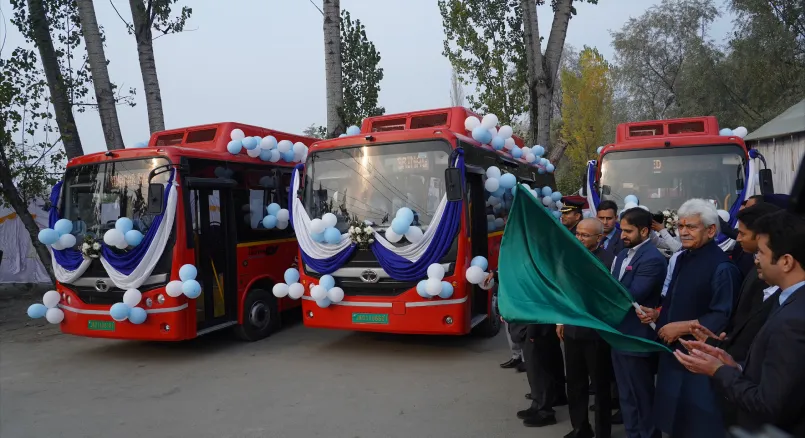
The 360 new electric buses, all single-deckers with three doors, will play a pivotal role in replacing aging diesel buses.
LTA Invests S$46.1 million in EV Charging Systems
The electrification of Singapore’s public bus fleet marked a significant milestone with the announcement of two large-scale contracts for the procurement of 360 electric buses and the deployment of state-of-the-art charging systems. Acting Minister for Transport Chee Hong Tat revealed these groundbreaking initiatives at the Singapore BusTech/RailTech Grand Challenge.
The 360 new electric buses, all single-deckers with three doors, will play a pivotal role in replacing aging diesel buses, with deployment scheduled to commence progressively from December 2024. Each bus is equipped with cutting-edge features, including a passenger information display system, integrated CCTV-collision warning system, driver anti-fatigue system, and a tyre pressure monitoring system.
The procurement involves 240 B12 model electric buses from Chinese automaker BYD and 120 buses from Cycle & Carriage Automotive, in partnership with Chinese bus manufacturer Zhongtong Bus. Land Transport Authority (LTA) has the flexibility to acquire an additional 60 electric buses based on future requirements.
To support the new electric fleet, LTA invested S$46.1 million in state-of-the-art EV charging systems, strategically placed at bus depots in Sengkang West, East Coast, and Gali Batu. These charging systems boast “smart” functions, optimising charging speeds and duration, along with real-time monitoring, diagnostic capabilities, and reporting features.
With this substantial investment, the total number of electric public buses in Singapore will reach 420, constituting approximately seven per cent of the overall public bus fleet. LTA emphasises that this recent purchase is the first batch of large-scale tenders, underscoring the government’s ambition for half of Singapore’s public bus fleet to be battery-powered by 2030, ultimately achieving a 100 per cent cleaner energy bus fleet by 2040.