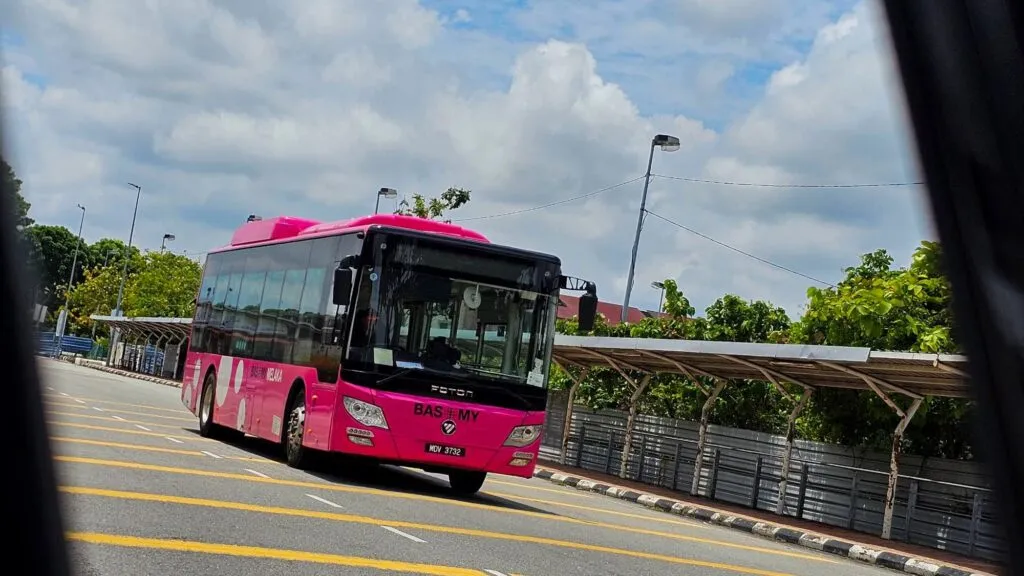
BAS.MY Kuantan launched on December 16, offering daily services across Pahang’s capital with cashless fares and a RM30 monthly pass.
BAS.MY Kuantan Operates 55 New Low-Floor Buses
Malaysia’s BAS.MY bus service began operations in Kuantan on December 16, 2025, expanding the government’s public transport rollout on the east coast with the launch of 16 routes served by a new fleet of low-floor buses.
The service, according to the Ministry of Transport’s (MOT) official statement, is intended to provide a more affordable and accessible mobility option for residents in Pahang’s capital.
BAS.MY Kuantan operates 55 new buses across routes linking Hentian Bandar with residential, industrial, and educational areas, including Gambang, Indera Mahkota, Sungai Lembing, Pekan, Balok Makmur, and Cherating. Services run daily from 6 a.m. to 10 p.m.
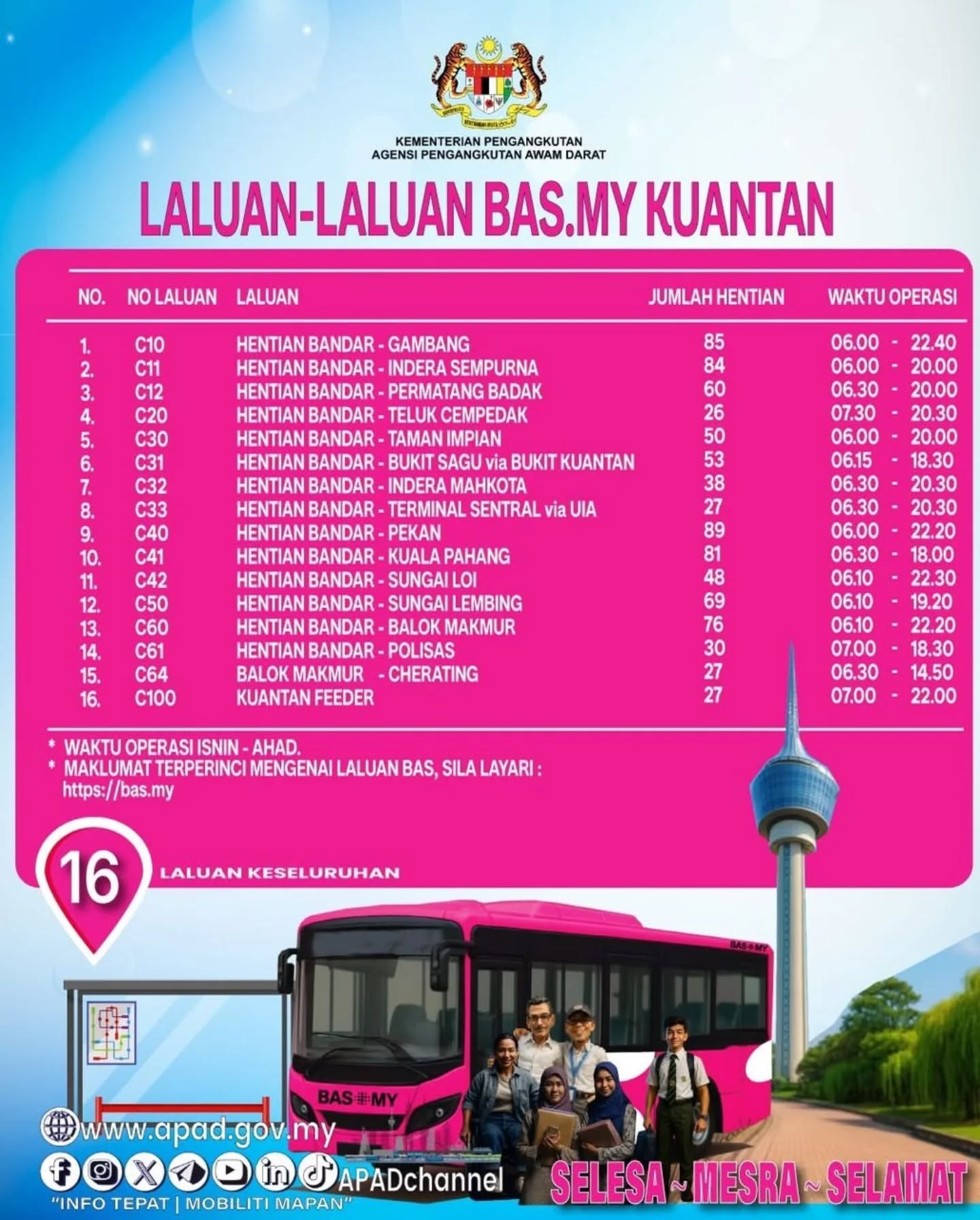
Passengers can pay fares using either cash or cashless methods. The system also includes concession cards for students, senior citizens, and persons with disabilities, alongside a 30-day unlimited travel pass priced at RM30, which the authorities said is aimed at reducing daily commuting costs.
The BAS.MY programme, which has already been rolled out in several other Malaysian cities, reflects the federal government’s push to make public transport the preferred mode of travel for its citizens, while supporting sustainable mobility.