From 15 to 20 September, IAA Transportation 2026 in Hanover brought together the commercial vehicle, transport and logistics industries to showcase solutions for the future of road freight. Under the theme “We Deliver,” exhibitors presented digitalisation, decarbonisation and technologies needed to make transport more efficient.
IAA Transportation 2026 Highlights Decarbonisation, AI, and Hydrogen Freight Tech
The event attracted a record 1,589 exhibitors from 46 countries, with more than 70 per cent from outside Germany. Around one-third of exhibitors participated for the first time, adding to the event’s increasingly international profile. China, Turkey and Italy were among the strongest international exhibitor groups. More than 150 world premieres and new products were unveiled, attracting more than 140,000 visitors, including over 113,000 industry professionals. International trade visitors accounted for a record 40 percent, compared from 34 per cent in 2024.
The breadth of the show made one thing clear: the commercial vehicle industry is moving beyond a simple shift from diesel to electric. It demonstrated how manufacturers are trying to solve the practical problems around range, charging, payload, energy supply, safety and fleet operation.
Electric Trucks Enters Long-Haul Race
One of the clearest messages from the show was the progress being made in extending the operating range of battery-electric trucks. Several European manufacturers presented vehicles capable of approaching or exceeding 700km, signalling a move towards wider use of electric trucks in longer-distance freight operations.
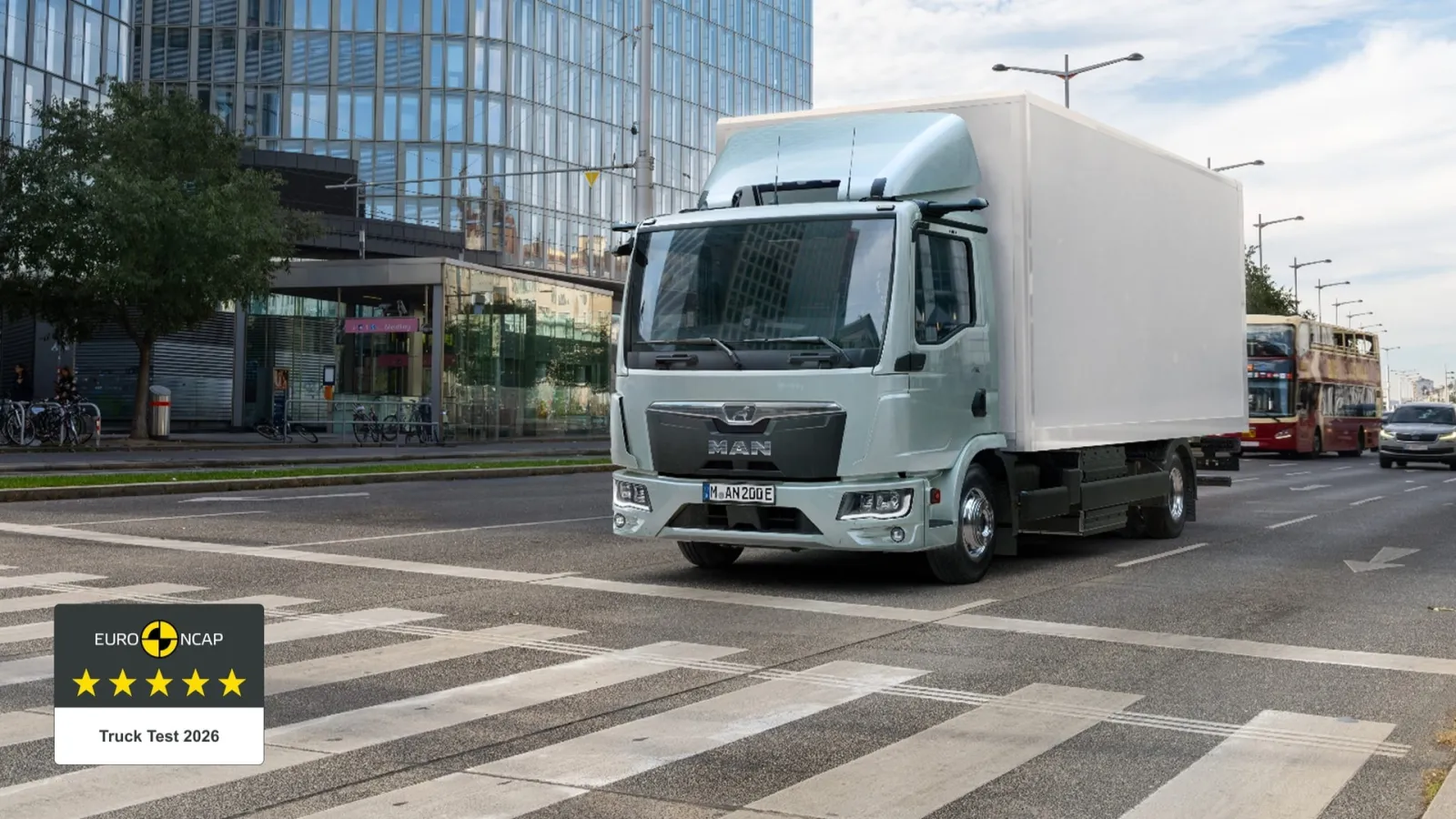
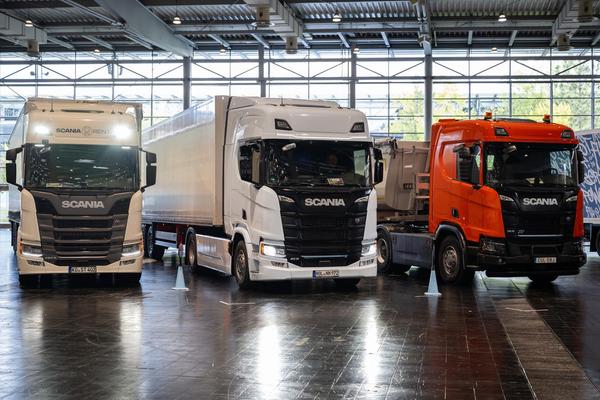
MAN showcased the new eTGX, with a range of up to 660km for a 4×2 tractor and up to 720km for a future 6×2 version with seven packs of battery. The truck is also designed for MCS charging of up to 750 kilowatts. Scania introduced an electric long-haul solution with a claimed range of up to 720km, using additional battery capacity and MCS charging. The company also introduced its Dynamic update for the R and S series, bringing aerodynamic and cab upgrades to both battery-electric and combustion-powered versions. The revised design can reduce energy consumption by up to 3 per cent on electric trucks and 2 per cent on combustion-powered models.
Volvo, meanwhile, has started series production of its extended-range FH Aero Electric, with up to 700km on a single charge. Renault Trucks is also extending its electric long-haul range with the E-Tech T780 alongside the ongoing development of the E-Tech T540. Equipped with a 780kWh battery, the E-Tech T780 fully electric heavy-duty tractor offers a claimed range of up to 660km.
Longer-range electric trucks also bring greater pressure on charging infrastructure. As charging power increases, fleet operators need to assess whether their depots and local grids can support the additional energy demand. MAN is focusing on depot charging and energy management for sites with limited grid capacity, making grid connections, power availability, load management and charging schedules increasingly important in fleet planning.
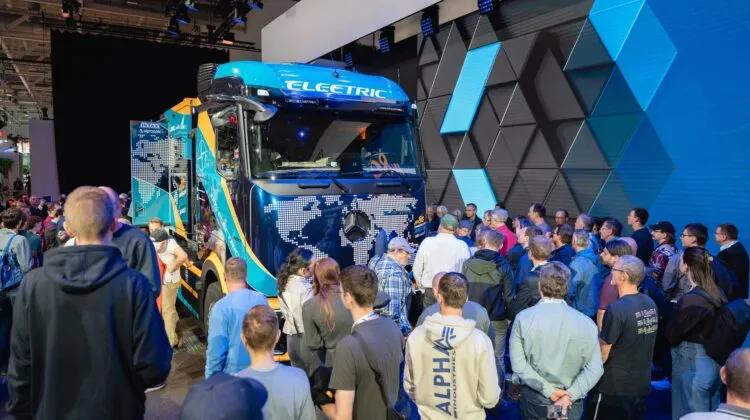
Mercedes-Benz Truck prioritised the new eAtros Lowliner, developed for high-volume transport. Its low coupling height allows trailers with greater interior space to be used, making it particularly relevant to applications such as automotive logistics where cargo volume can be reached before the legal weight limit.
MCS Charging Becomes Practical
The development of high-power charging is closely linked to how electric trucks fit into real fleet schedules. EU rules require long-haul truck drivers to take a break of at least 45 minutes after 4.5 hours of driving, creating a potential window for recharging. Milence, Daimler Truck, MAN Truck & Bus and Scania demonstrated how Megawatt Charging System (MCS) technology can make use of this period.
Live demonstrations in Hall 14/15 showed battery-electric trucks being charged to 80 per cent or fully charged within the legally required 30- to 45-minute rest period. The demonstrations highlighted how high-power charging could be integrated into existing driver and fleet schedules, reducing the need for additional charging stops in long-haul operations.
BYD pushed charging performance further with the debut of its flagship ETT 44. Using a 1.5 MW charging architecture, the electric truck can reach an 80 per cent charge in just 20 minutes, demonstrating the potential for even shorter charging windows in high-utilisation applications.
Hydrogen Keeps Its Place
Hydrogen remains part of the long-haul equation, particularly for applications where range, payload and rapid refuelling are major considerations.
On September 15, Daimler Truck, Volvo Group, Toyota Motor Corporation, Bosch, Air Liquide, TotalEnergies, TEAL Mobility and MB Energy unveiled plans to coordinate vehicle deployment, hydrogen supply and refuelling infrastructure, with Germany serving as a model for scaling hydrogen trucking across Europe by 2030. The initiative addresses a central challenge for hydrogen trucking: vehicles, fuel supply and refuelling infrastructure need to develop at the same time and at a cost that can support competitive fleet operations.
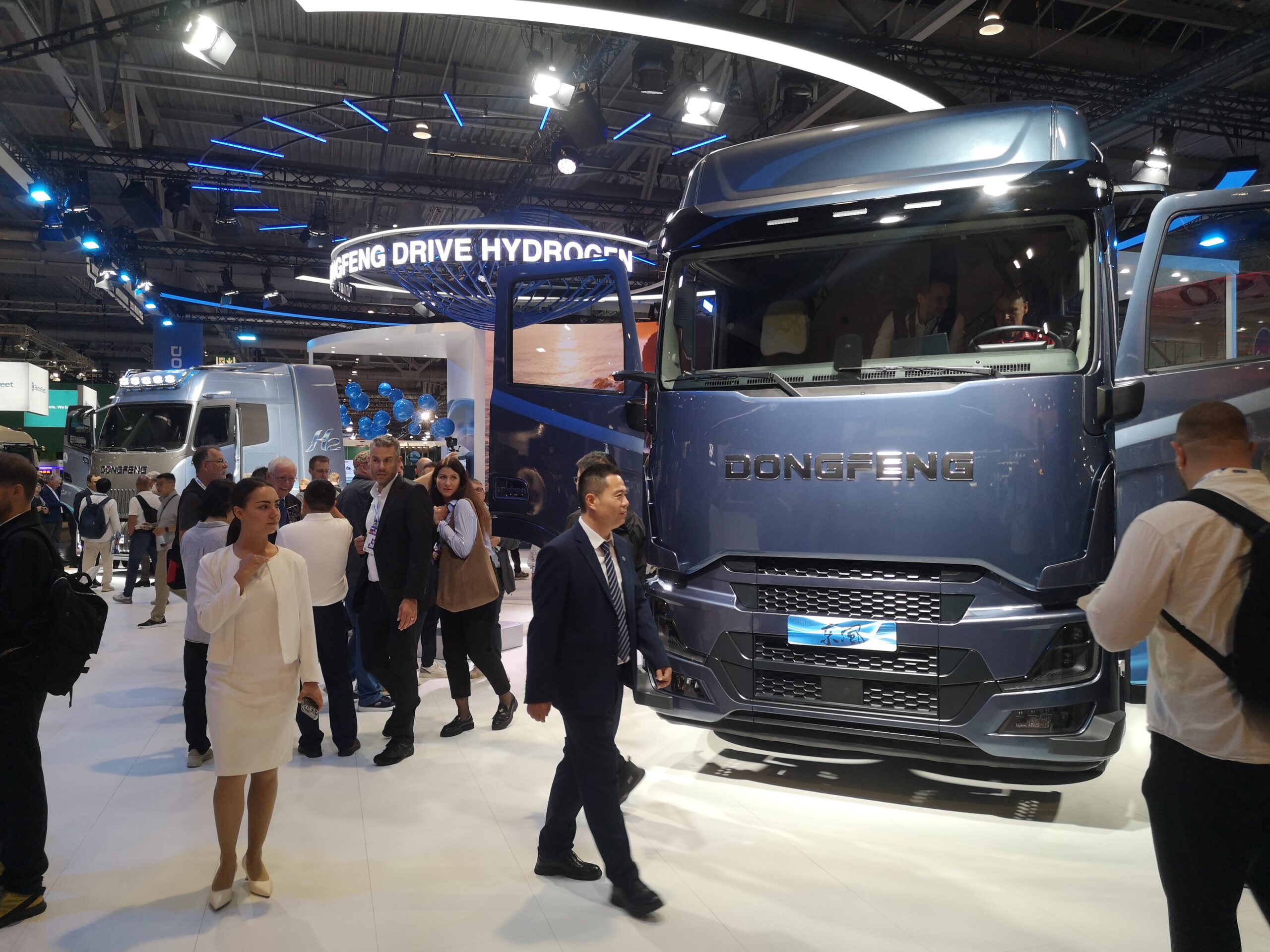
This announcement gives greater context to the manufacturers’ product plans. Daimler Truck unveiled the Mercedes-Benz NextGenH2 Truck, which uses liquid hydrogen and is designed for ranges of more than 1,000km on one refuelling. A small series of around 100 vehicles is planned for customer operations from the end of 2026. Dongfeng made its IAA debut with three hydrogen-powered vehicles and a new 400kW fuel-cell system, citing a single-refuelling range of up to 1,700km for its hydrogen-electric platform.
Automation at IAA Transportation was less about fully automated trucks and more about the technologies required to make higher levels of automation possible. Valeo showcased sensors, cameras, computing systems and sensor-cleaning technology designed to support applications up to SAE Level 4, highlighting the importance of reliable perception and data processing in automated driving. At vehicle level, Daimler Truck introduced Active Drive Assist 3, bringing Level 2 partial automation to the Actros. DAF and Einride are also working towards integrating Einride’s autonomous-driving system into a battery-electric DAF truck, with testing planned for 2026 and vehicle integration targeted for 2027.
Higher levels of automation are also being explored in controlled environments. Skyworth Auto presented its electric Z9 heavy truck as a Level 4 vehicle for applications such as ports, logistics centres and industrial sites. GAC is working with Pony.ai on a battery-electric Level-4 robotruck, with Pony.ai already operating hundreds of autonomous commercial vehicles in China and now exploring tests and deployment possibilities in Europe.
These developments show the progression from driver assistance towards more autonomous operations. A Level 4 designation, however, does not mean unrestricted driverless operation on public roads. Deployment remains dependent on defined operating conditions, approved routes and regulatory requirements.
Software is becoming an increasingly integral part of the commercial vehicle. At IAA Transportation 2026, ZF demonstrated its software-defined vehicle concept for vehicle-to-infrastructure interaction. HERE Technologies showcased AI-based routing, TIMOCOM presented an AI negotiation assistant for freight allocation, and KRONE introduced TrAIler Health, which uses telematics, braking and tyre data to support predictive maintenance.
At OEM level, Daimler Truck expanded its Fleetboard ecosystem to cover fleet management, operational analysis, charging and diagnostics. MAN presented an e-mobility ecosystem linking charging infrastructure with energy management and bidirectional charging. Mercedes-Benz Vans is taking the concept further with MB.OS, its digital platform for over-the-air updates, AI functions and third-party applications. The shift means the value of a commercial vehicle is increasingly shaped not only by its hardware, but also by the software and digital services that manage how it operates.
Chinese Automakers in the Spotlight
China made a strong showing at IAA Transportation 2026, with more than 460 Chinese companies exhibiting at the Hanover event. Their presence went beyond electric vehicles to heavy trucks, vans, autonomous driving, batteries, charging systems and other parts of the commercial vehicle ecosystem. Major manufacturers including BYD, FAW Jiefang, Foton, Sinotruk, Sany, Dongfeng and Farizon presented electric trucks and vans, concept vehicles and new technologies.
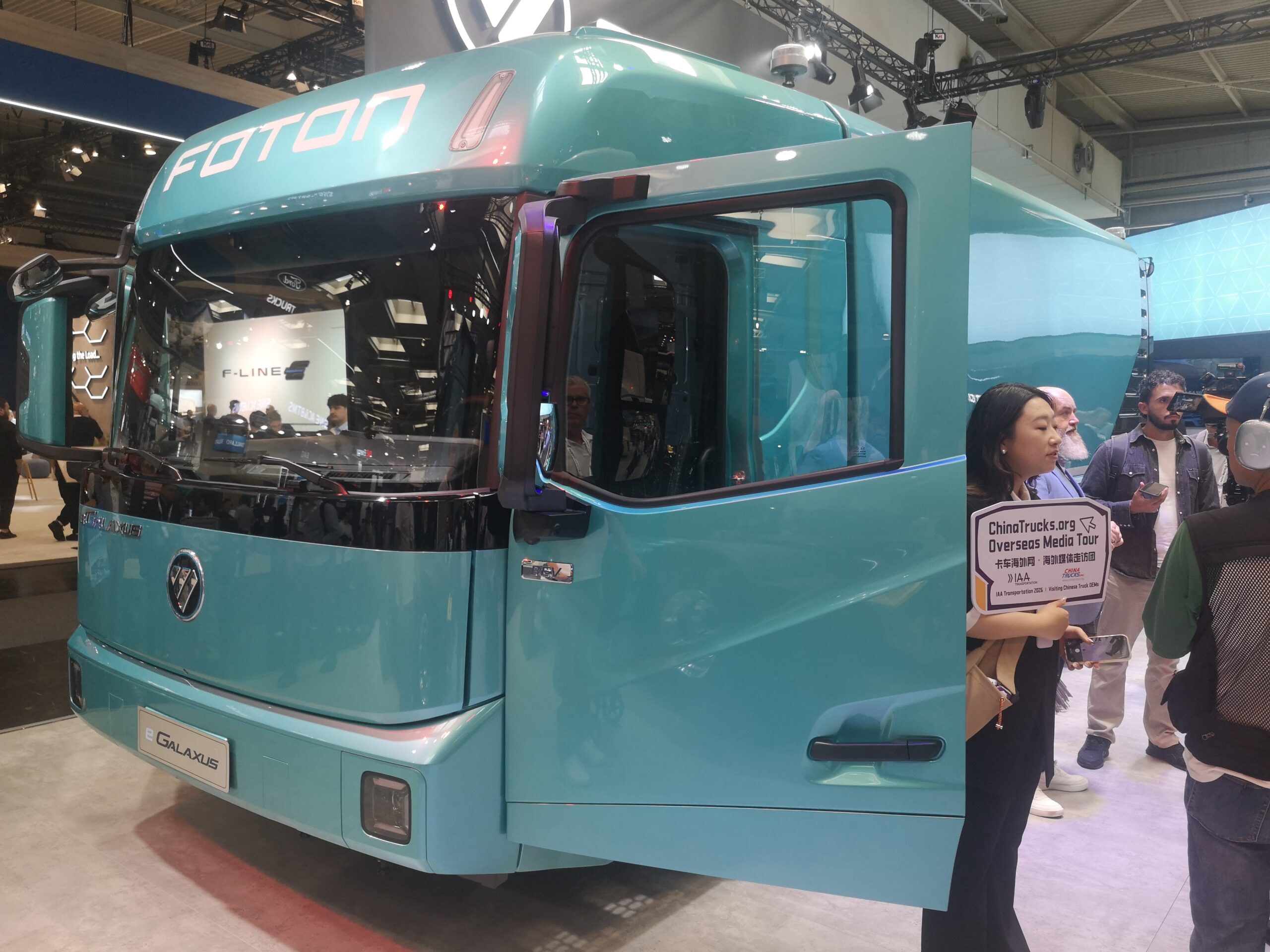
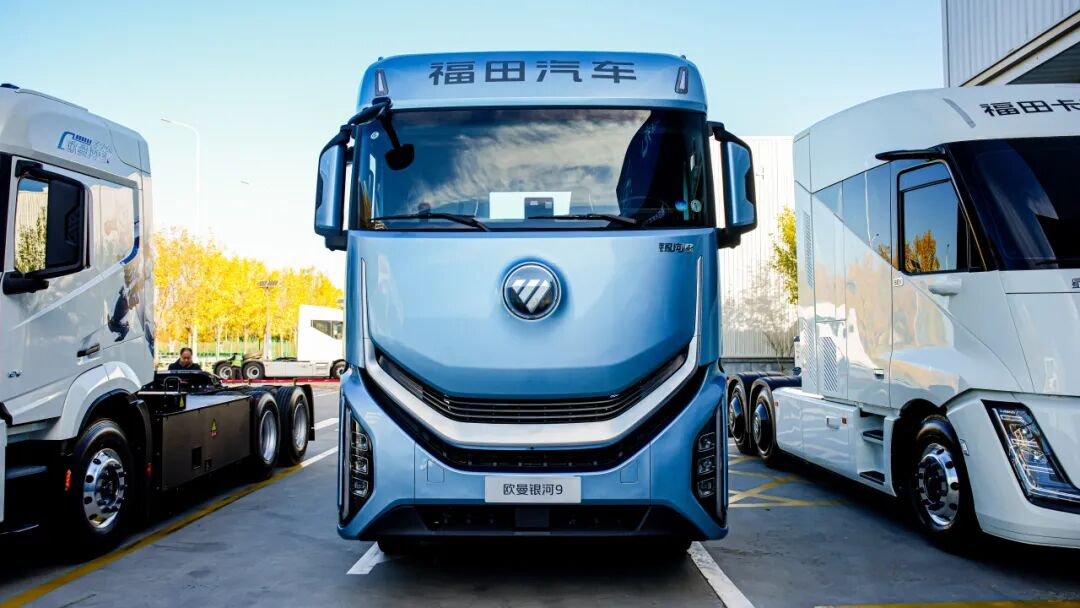
BAIC Foton made its global debut with the Cavan Beacon, a zero-carbon heavy truck offered with battery-electric, battery-swapping and hydrogen powertrains. Range claims exceed 600 km on battery and 1,000 km on hydrogen, with megawatt fast charging taking the battery from 20 per cent to 80 per cent in 18 minutes.
More significant than the number of Chinese exhibitors was the increasing focus on European market entry and localisation. Farizon is expanding its European dealer network and has opened a spare-parts warehouse in Germany. Sinotruk and SuperPanther have started producing electric trucks at Steyr Automotive in Austria, and Sany has established European parts support and workshop partnerships. These moves indicate a shift from exporting vehicles to building the production, distribution and after-sales infrastructure needed for long-term operations in Europe.
The tyre sector reflected the same focus on efficiency and total operating costs. Hankook Tire returned to IAA Transportation with its truck, trailer and bus portfolio built around its Smartec technology platform, targeting safety, mileage, durability, retreadability and braking performance. Its display covered products for long-haul, regional transport, electric city buses, the Laufenn LF95+ trailer tyre, Alphatread retreading solution and Hankook Smart Fleet tyre management system. The company also showcased its 3D-printed Sustainable Concept Tire and WheelBot 2.
Apollo Tyres used the show to complete its EnduMile long-haul range with three new tyres for steer and drive axles. Developed in Europe, the EnduMile LHA, LH Front and LHD are designed to balance mileage, fuel efficiency and durability. Apollo reported up to 10 per cent higher mileage for the LHA and up to 20 per cent for the LHD against a leading Tier 1 competitor in controlled European testing. Together with the existing LHT trailer tyre, the range reflects the industry’s continuing focus on reducing fuel consumption and whole-life operating costs without sacrificing tyre mileage.
For fleets, the transition is therefore becoming less about choosing between technologies in isolation and more about finding the combination that fits a particular route, payload, duty cycle and operating environment. Manufacturers will need to turn these technologies into reliable, commercially viable solutions, but their wider adoption will also depend on charging and refuelling infrastructure, grid capacity, regulations and other supporting conditions.
IAA Transportation 2026 showed that the technology is moving quickly. The industry’s progress will depend on how effectively manufacturers, infrastructure providers and policymakers translate that progress into solutions that can work at scale.
The next IAA Transportation will take place in Hanover from 19 to 24 September, 2028.